

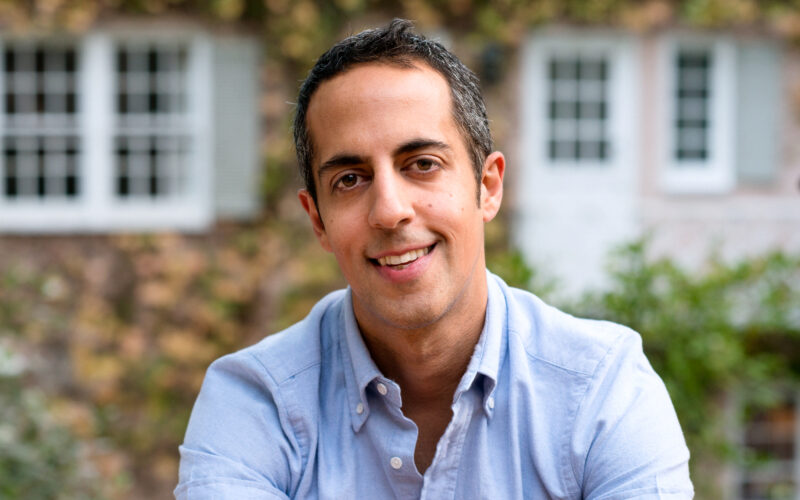
Earlier this month I was fortunate enough to video chat with author Abdi Nazemian about his newest book Exquisite Things which is available as of September 23, 2025.
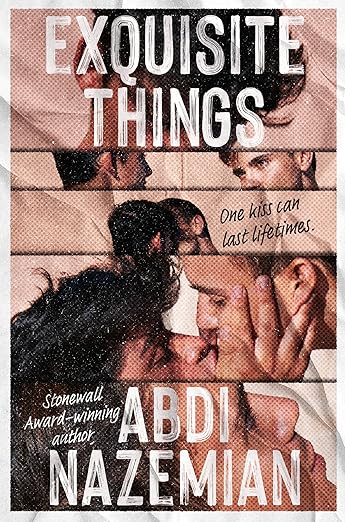 Shahriar believes he was born in the wrong time. All he’s ever wanted is to love and be loved, but 1895 London doesn’t offer him the freedom to be his true self, and Oscar Wilde’s trial for gross indecency has only reaffirmed that. But one night—and one writer—will grant Shahriar what he’s always wished for: the opportunity to live in a time and place where he can love freely. Rechristened as Shams and then as Bram, he finds what feels like eternal happiness. But can anything truly be eternal?
Oliver doesn’t feel that 1920s Boston gives him a lot of options to be his full self. He knows he could only ever love another boy, but that would break his beloved mother’s heart. Oliver finds freedom and acceptance in the secret queer community at Harvard that his cousin introduces him to. When he meets a mysterious boy with eyes as warm as a flame, his life is irrevocably changed, forever.
Spanning one hundred and thirty years of love and longing, this tale of immortal beloveds searching for their perfect place and time is a vibrant hymn to the beauty of being alive, a celebration of queer love and community, and a reminder that behind every tragic thing that ever existed, there is something exquisite.
Our conversation ranged from disco and many types of music to Oscar Wilde, queer history, book bans, joy, resistance and much more. Though the topics were often serious, we still had many opportunities for laughter which I totally appreciated.
Crystal: What helped you get these specific characters? Like how did they come into being for you? Because there are just so many wonderful characters.
Abdi: You know, I don’t plot out my books. So a lot of times they come very organically. And in this case, it was slightly different because, and I write about this in the author’s note, many of the time periods that I immersed the characters in, were time periods I had researched for previous projects that didn’t see the light of day. Mostly film and TV and in one case as a scripted podcast. For example, Boston in the 1920s and what happened at Harvard University where they put a group of gay students in a secret court, that was something I had first tried to produce as a film scripted by two friends of mine. Many years later, I was approached to write a scripted podcast about it and immersed myself in research to write that. And it didn’t get made and it just lingered in me. I’m like, it’s not a story people know. It felt like a story that was very important to our understanding of queer rights, to where we are, to the power of educational facilities to represent or not represent their students.
And that’s something I feel, I didn’t think about this when I was writing it because it predated this, but I went to Columbia University and I’ve been extremely horrified by how Columbia has capitulated to the Trump administration and the way they’ve turned their back on their own students for protesting. And when I was at Columbia, I was an Iranian born green card holder. I was not a US citizen. I could easily have been like one of these students. So, you know, that’s an example of a thing where I’m like this time period, this story is just living inside me and I want to find a way to tell it. So that’s one example. But in every other case, like London in the 1970s and 80s, I had written a TV pilot about a serial killer in London who had targeted young gay men who went un-apprehended for a long time because, of course, the police system is often very homophobic and doesn’t, you know, investigate the same way when it’s young gays being targeted. So stuff like that.
I love history and I felt like there were all these histories kind of living in me. And then one day I just had the idea. I think I just was journaling. I can’t remember exactly how it came, but I’m a big journaler and traveler and I tend to love to go to foreign places and write in my journal and try and really dig out like what is the story I want to tell? And I somehow remembered that my favorite childhood book was A Picture of Dorian Gray. And I started to think about like what was it about that book that fascinated me so deeply as a kid? What was it doing? Why did I care? And it really came down to this realization of I’ve always been this person who feels like I was born in the wrong time or who like as a kid I was always nostalgic for past eras I wasn’t even a part of. And still as an adult I’m that way. And so I realized that so much of it was this idea of immortality. But I wanted to approach it in my own way. So that’s where I came up with this concept of a gay love story about two boys really looking for a time where their love isn’t a crime and ultimately realizing that we can’t ever expect that. Like we have to just love the time we’re given. And so I think hopefully it is an effective love story. But also for me it’s like it’s shining a light on moments in history that aren’t often explored and that tell us a little bit about how we got here and how we can keep moving forward.
Crystal: I didn’t know about the Boston situation but I also didn’t even know about the disco. What was that again at the baseball game?
Abdi: Oh disco demolition night. You didn’t know about that? You know that’s really interesting that you missed that because that to me is more well known at least in the US because it happened here. But disco demolition night I think at least in the queer community, and I believe in the Black community as well, is a pretty symbolic thing because disco of course which is a genre of music that has often been written off by the critics or by whoever was like deciding what became canon. And those people often write off what is made and created by women and people of color and queer people. You know disco was seen as like an unworthy art form compared to kind of like white male rock music.
And so disco demolition night was this real symbol of I think everything we’re seeing again with the Trump administration of the anger that happens when marginalized people start to gain power in culture and become the thing that everyone is gravitating toward. And their answer is literally to demolish us and our art. And so that’s a lot of what the book is about. The book takes place over 130 years and it’s about how every single time queer people and marginalized people take a few steps forward the powers that be will find a way to try to crush us again. And so how do we deal with that? How do we keep loving and uniting and creating?
Crystal: And finding joy.
Abdi: Yeah absolutely. Because that’s part of our job. I think there’s a line in the book if I’m going to misquote myself but it’s the basic idea of the line is that our job is to love the life we’re given and then to pass that love on to the next generation. That’s something a very wise friend told me when I was younger and it really stuck with me because as hard as our lives can be we have to find a way to love them otherwise we let the people who want to demolish us win.
Crystal: You love history and it seems like you also love musical history. While I was reading there were so many musical references. Some I knew and some I had to sample. Were you also listening while you wrote? Do you have soundtracks going?
Abdi: Yes. Music is my truest obsession, and I have a lot of obsessions. I’m obsessed with film. I’m obsessed with the arts in general, but music really is where I become the most obsessive version of a fan. I have a playlist for every single book that I write because music helps me get into the mood of the piece.
The book of mine that felt like the start of a new chapter for me as a writer was Like a Love Story. Because to me, that book was the first time I let myself be truly vulnerable and honest on the page. And moving forward from that book, I feel like every book I try to always pick a part of my life that feels really raw and vulnerable that I’m scared to write about.
And with Like a Love Story, of course, that book from the title into the story is very much an homage to Madonna, who was my childhood hero and remains someone I am so grateful for because truly without her, and I know I speak for a generation of queer people, I don’t think I could have come out and overcome my shame. She was the one force that was speaking directly to me and telling me to be proud and showing me a celebratory, joyful version of queer life.
But since then, always when I enter a book I think that the book has to have a musical muse. Right after Like a Love Story, I wrote The Chandler Legacies, which is inspired by my time in boarding school and the culture of abuse there. And another artist who was formative to my teen years was Tori Amos, who was one of the first people to speak about sexual abuse. And she kind of became the muse of that book. And she’s very much woven in.
And then with Only This Beautiful Moment, I very much think of Googoosh, who’s our great Iranian star. And that book is an intergenerational Iranian story. And one of the most pivotal scenes involves two characters singing one of her songs in a piano bar. And so I think of her as the muse. And with Desert Echoes, it’s Lana Del Rey.
And with this one, you know, it’s interesting. Exquisite Things is so much more expansive than most of my other books. It takes place over 130 years. So you have references to everything from classical music to the 1920s kind of Sophie Tucker bar music to a lot. But, you know, I always thought of Donna Summer as the muse of the book. And you talked about disco demolition night already. And, you know, I thought that disco and the merging of, you know, what I loved when I was researching London, I’m obsessed with London. It’s my favorite city. I go at least once a year and I write almost all the first drafts of my books there, at least the beginnings. Yeah, I just find it very inspiring. I love the streets of London. I love the energy. I love how diverse it feels. I love theater. So I see a play every night when I go there and just ingest all that artistry. But what I loved about researching London at that time is that the community of Brixton was one where queer people and Black people were coexisting. And there was this merging. And that to me was what disco was. And so Donna felt very evocative of what I wanted the book to be about, which is about people coming together to create joy and art and resist corruption and power. What I love about my books is in some cases I put, I mean, Donna and Madonna and all of them, these are artists I’ve loved since I was a kid. With Exquisite Things, the more I started researching London in the late 70s and early 80s, I realized how crucial lovers rock and reggae music was to that community. And that was music I wasn’t as familiar with and now I listen to it nonstop. So because of the book, I started to listen to that music and it just captivated me. What’s very fun for me with music is putting the stuff I’ve always loved in, but then also doing immense musical research to fill in the gaps of my own knowledge. And I do make playlists for my books. So I already have one that I share with readers for Exquisite Things because I know it’s a lot. I’m sure readers read it and they’re like, I haven’t heard of half these people. But I love that, you know, when I wrote Like a Love Story, that book is so filled with references to musicians from the 80s. It’s also the uncle character in that book has movie nights with the teenagers where they watch old movies. And my editor had said, I don’t think the teen readers are going to know anything that you’re talking about. And I said, it doesn’t matter. Like if they don’t get a reference, they’ll either blow past it and just assume it’s some famous artist, or if they’re curious enough, they’ll dig into it. And so many readers have written to me and said, I mean, I can’t imagine someone having not heard a Madonna song, but I’ve had readers listen to the first Madonna song because of the book or that they went back and watched some old movie that is referenced in the book. So there are people who will dig in, but I think that that’s very normal to how I watch movies and TV with my children and they don’t ask about every reference they don’t understand. If they’re curious, sometimes they do. And if not, they just contextually understand a bit of it and move on.
Crystal: I was definitely looking stuff up. And then also I know I had to refresh my memory with Oscar Wilde. I had read Dorian Gray, but it had been many years.
Abdi: Someone asked me if you have to have read Dorian Gray to read this book. And the answer is no, you really do not need to have read Dorian Gray. And this is a very different take on Dorian Gray. In Dorian Gray, the character of Dorian is horrible. I mean, he’s an awful man and external beauty and eternal youth is like a symbol of his moral, you know, horrificness. Whereas this story is really using this concept of immortality and eternal youth to explore love and activism. And the characters, I hope our characters, though they’re flawed, that you can let into your heart in a different way.
Speaking of Oscar Wilde, who was one of my childhood obsessions and who was until I discovered James Baldwin, Oscar Wilde was my favorite writer as a kid. He was put on trial for gross indecency. And so putting the main character in London in 1895 and his story begins against the backdrop of Oscar Wilde’s trial. That to me was a very important piece of unlocking this. Because I think in a way, the thing that truly galvanized me to write this was the experiences I’ve been having with book banning and now I’m many years into being banned and I think I’ve found my center with it. But in the beginning, it was very alarming. I felt very unsettled by it. I was angry. I was hurt. I was all of the things that it triggered responses that I feel like brought me back to my childhood when I was bullied or felt shamed. And what I started to realize with book banning is this is like a continuum that’s been going on for so long. And Oscar Wilde is a great example. He was banned. He was put in prison. And so I started to look at these moments in history as like, what are these other moments when we have tried to be banned, suppressed? And how do I connect these into something that feels hopeful and galvanizing?
Crystal: I’m a school librarian and book bans are definitely a concern. Your book definitely shows that this is not a new thing. As you’ve worked through this, do you have advice or resources that you recommend for readers who are also concerned about censorship?
Abdi: Well, first of all, I want to say thank you to you and all the librarians because I do think looking at the way book banning is covered, there is very little emphasis put on the educators who are on the front lines. I have done many school visits. They have really gone down because of the book banning. It’s pretty alarming how drastically, and it’s not just for me because I’m repped by a speaking agency and they said across the board, it’s just gone down. And I think that’s a consequence of the culture of fear and also of the slashes to funding. There’s a lot of issues, but I do think when I have visited these schools, I have such beautiful, moving conversations with the educators who are telling me about what they’re dealing with as far as the difficult conversations they have to have with parents in their communities. Sometimes the anger or threats they’re on the other side of. In many cases, and I have a cousin who’s an educator as well, so I speak to her a lot, but in many cases I speak to librarians or teachers paying out of pocket to buy books for students that they know the student will need, but that their school won’t approve. And I know how underpaid educators are. It breaks my heart to think that, you know, and I say this all the time when I speak to people about book banning, you know, when I get a chance to speak to media that has reach. I’m like, where are the pieces that are honoring the educators? Why are you not shining light on the on the heroes of this movement? There’s so much coverage of the Moms for Liberty and in some cases, a lot of coverage of the authors. But I’ve seen so few pieces that are substantively looking at educators. And so I want to thank you for that.
In answer to your question, I would say I really think book banning is, as we’ve seen, it’s a very local issue. It can go statewide as it did in Utah, where, you know, Like a Love Story is banned statewide in Utah. But that’s rare for the most part. You’re going district to district. And so I think it’s very important that people get involved locally again. And we just don’t have a culture of a lot of civic local energy anymore. We put so much energy into thinking and fearing what’s happening nationally, which I understand why, because what’s happening nationally is a descent into authoritarianism. But, you know, I do think if we want to combat book bans, we have to get involved locally.
I do want to shout out an amazing young adult and kid lit author, Melissa Walker, who started a group called The States Project. The States Project have different groups that are raising money for local elections. And they’re really focused on trying to win back the kinds of local elections that we don’t pay a lot of attention to because the media doesn’t tell us anything about them. That’s an amazing organization. I would definitely shout out Authors Against Book Bans, which I wish I had time to be more involved in, as I’ve told all my amazing friends who are more involved. But that one is an organization that’s author led. I’ll forget some of the people who are most involved, but I know David Levithan, Samira Ahmed, Adib Khorram, Dhonielle Clayton, and a lot of other people. It’s just an amazing author led organization that is doing so much good work. So there there are a lot of ways to get involved.
I also, and this is a very hard thing for me to say, because like I woke up today and checked the news and it was so alarming that I felt myself sink into despair. So I think the message I wanted to send is we have to remain hopeful. And I do think that’s very true. We have to find ways to remain hopeful because without hope, like I said, we let them win. At the same time, it’s okay to have moments where you feel sad or despairing. It’s really, really hard sometimes to be alive in a time where you feel like your very humanity is being attacked and is on the line. And then if you’re like me and you felt that degree of shame when you were young and you know young people are being made to feel that way again, it’s devastating. It’s so hard. So, you know, I think it’s okay to feel all the feelings. What are your tools for staying hopeful and for finding joy?
My books tend to focus on really difficult subjects, Like a Love Story deals with the AIDS crisis and only this beautiful moment deals with Middle East and US relationships and tension and war. I do quite a bit of research when I write because I’m a history nerd and I try to talk to people who have lived experience with what I’m writing about. And a consistent theme is that there’s always joy in pain. You know, like when I talk to ACT UP activists who were fighting in the 1980s and 90s, they would tell me that they were grieving their community. They were going to funerals constantly. They were planning actions of resistance against the government. And also at night they were going out dancing and cruising and falling in love. And, you know, you can do both.
And similarly, you know, in Only This Beautiful Moment, quite a bit of it takes place in contemporary Iran and shines a light on the queer community there, which does exist, though they can’t be as vocal as we are here. And they would say to me that, yes, of course, the Iranian government is as awful and repressive as we hear. It is awful, which is why people are always trying to protest in the streets. But that doesn’t mean that they’re not finding ways to congregate and dance and find joy and create art. Like all these things can coexist. I think it’s so important when we want to reach young people, like I write for teenagers, to remind them that no matter how hard their circumstances might be, it is okay to feel joy and love. And I think that’s something that I didn’t know when I was young. And I think some young people don’t know it. They almost feel like they’re betraying something by feeling joy when there’s so much pain in the world, you know, because it’s like, how do you? And in my book, Desert Echoes, where I deal with grief because my first boyfriend died very young. In the grief, I felt like, am I betraying him by living a happy, fulfilled life? Like, am I not honoring the grief if I feel joy and connection? And so I think to tell young people, no, it’s actually okay. It is the human condition that we are allowed to find joy and hope and love and connection even in the hardest times. That’s so much of why I do what I do.
Crystal: You brought up the word shame again, which shows up many times throughout the novel. In one of the scenes somebody asks Bram if he doesn’t feel shame. And he’s like, tell me one good thing about shame. How and why do you think shame is being used in the world? And is there any possible good coming from it?
Abdi: You know what? I don’t think so. But I recognize that I’m in the minority on this. I have gotten some irate messages on social media when I speak about how I don’t believe shaming is ever good. I try very hard not to shame individual people. Somebody might be able to convince me something good comes from shame. And look, the world goes around because we all think differently. So others might think shame is a tactic that works.
One of the things that I find the most alarming about social media and about this moment we’re in right now is that I think we have all been conditioned and brainwashed into believing that shaming individuals is something that will lead to societal change. And I really don’t think so. I think what it’s done is it’s taken our eye off of how we create real change, which is by looking at systemic problems.
So I don’t see any value. If we see one human doing something bad who’s not in government or a CEO of a major corporation, and we decide to all pile on that person on social media, I don’t think that leads to societal change. And I actually think it’s a distraction from what we need to upset these systems. And I don’t think it’s a coincidence that authoritarianism has been rising all over the world, including in the U.S., as social media has risen as well, because I think it’s distracted everyone into thinking that screaming at a celebrity who said something stupid is a viable way to be a change maker. And I don’t think it is, but I think we live in a culture of public shaming, and that’s not— to me, that’s not useful.
Again, others might disagree, and I know they do, because every time I’ve tried to speak out against this kind of public shaming, people tell me that I’m wrong, and maybe I am. You know, I don’t—I grew up in a family that all thinks differently, and we all love each other. Many of my friends disagree with me. I’ve always found it possible to coexist with people who don’t think like me. That’s not—it’s not a choice I ever had. I just grew up in a world where no one thought like me. That’s my belief, and I have to hold to it, because shame was so corrosive for me. I felt it deeply as a kid. It was flung at us as young queer people in the 80s and 90s in ways that were so destructive, and I’ve had so many close friends, including my first boyfriend, die of either overdose or suicide. So many, all queer. And I really think that the true root cause of that is shame. That’s my belief. Others can disagree. I think that working through shame is so hard. And I choose to just reject shame altogether and try to, if I’m dealing with an individual human, I try to see their humanity and have empathy for why they might think the way they do or what the circumstances were. And then I try to focus my real ire when it comes to creating societal change on systems, on governments, corporations, laws. But that’s me. That’s my choice.
Crystal: In your book, Bram says his curiosity, persistence, and ability to laugh at everything is what keeps him going, what keeps him alive. What keeps you alive? Is it similar, different? What keeps you alive and sharing your stories?
Abdi: You know, I suppose now that I’m a parent, I have to confess that so much of the advice I put in my books, like lines like that, when you said it, I was like, oh, my God, that’s what I say to my kids all the time. And so I have to confess that a lot of what I put in my books is what I say to my own kids, because what I say to my own kids is what I think might be useful for young readers to hear.
I say it to my kids all the time that the two qualities that have served me the most, and I have thought about this quite a bit, because like I said, I’ve lost many. And when my first boyfriend died, he was such a magnetic human, so talented, so successful, so charismatic. It baffled me that he could have chosen to leave this life, and so it made me really dig into myself and be like, what are the things that made me survive? Why am I here when so many of my friends aren’t? God, now I’m thinking of that song from Hamilton that Burr sings, “Wait For It.” Remember where he says, like, if there’s a reason why I’m alive when everyone around me has died? Like I think about what are the qualities that got me through all the hard stuff? I do think the two that I keep coming back to are one – curiosity, because when you’re curious, you are always willing to grow and learn, and you’re also always willing to give someone else the gift of your curiosity so that as opposed to demonizing them and thinking of the world as binaries where, like, there’s good and bad, you think more in the grays and you think, well, maybe I can learn something deeper about humanity. So I think curiosity is something that without it, we isolate. And when we isolate, we can’t thrive and survive.
And the other one is a sense of humor and specifically being able to laugh at yourself. And that is something that I think is just so important for survival because the world is going to test us all the time. And if we can’t laugh through it, I think that that’s very hard. And I think people have an easier time laughing at other things than at themselves. But the core part of that to me is that we have to be able to be in on the joke about us and to see that once in a while we behave in ways that are absurd or silly or worthy of laughing at because we all are. We’re flawed.
I will say, and I’m not sure if this is in the book, but a thing that has been very interesting to me in writing these books, and I’ve been talking to a lot of young people on the set I’m working on right now about this phenomenon, but it’s the phenomenon of like people thinking that everyone has to be likable or perfect. And oftentimes I’ll hear people say about my books and other books, like I didn’t like the book because I didn’t like the character or this character. And I’m like, but the character wasn’t meant to be liked. The character is meant to exist and in existing, you are flawed. You do things that are awful sometimes, things that are rash, things that are selfish. And so I always want to remind young readers, if you’re approaching the characters you read as I must like them, then you might be thinking about yourself that way. And that’s also really destructive.
That’s another thing when I think about the phenomenon of social media, just the idea of likes. The idea of getting likes for your personal life is so destructive. We are not here to be liked. We’re here to be complex and to experience the breadth of existence, which means we’re sometimes going to do things that are not great. And we have to forgive ourselves and others for all of that. Otherwise, we’re really doomed. I think that’s an optimistic statement. I know I ended it by saying we’re doomed, but I think the optimistic part is, like, maybe we’re now on the precipice of a time where we can start realizing we’ve gotten some stuff wrong and having harder conversations with humor and without shame. We really talk to each other and communicate more openly with each other.
Crystal: Thank you very much for your book and your time.
Abdi: I appreciated the opportunity to do it. Thank you.
Wow! I’ve only read a couple of Abdi Nazemian’s books, but I want to read more. I love what he has to say here about how we don’t exist to be liked, and if that’s how we’re approaching characters in a book, it might be how we’re approaching ourselves. I had to sit back and think on that. Well said. Thanks for sharing this!