


As we near the creepy time of the year, we figured vampires would be awesome for our group discussion. This Ravenous Fate was an excellent pick and was definitely an impressive debut from Hayley Dennings.
Publisher’s Summary: It’s 1926 and reapers, the once-human vampires with a terrifying affliction, are on the rise in New York. But the Saint family’s thriving reaper-hunting enterprise holds reign over the city, giving them more power than even the organized criminals who run the nightclubs. Eighteen year-old Elise Saint, home after five years in Paris, is the reluctant heir to the empire. Only one thing weighs heavier on Elise’s mind than her family obligations: the knowledge that the Harlem reapers want her dead.
Layla Quinn is a young reaper haunted by her past. Though reapers have existed in America for three centuries, created by New World atrocities and cruel experiments, Layla became one just five years ago. The night she was turned, she lost her parents, the protection of the Saints, and her humanity, and she’ll never forget how Elise Saint betrayed her.
But some reapers are inexplicably turning part human again, leaving a wake of mysterious and brutal killings. When Layla is framed for one of these attacks, the Saint patriarch offers her a deal she can’t refuse: to work with Elise to investigate how these murders might be linked to shocking rumors of a reaper cure. Once close friends, now bitter enemies, Elise and Layla explore the city’s underworld, confronting their intense feelings for one another and uncovering the sinister truths about a growing threat to reapers and humans alike.
Content warnings: Scenarios involving emotional abuse, obsessive compulsive disorder, anxiety, suicidal ideation, violence, murder, and mentions of a race massacre.
____________________________________________________________________________________
Our discussions can be a little spoilery so beware!
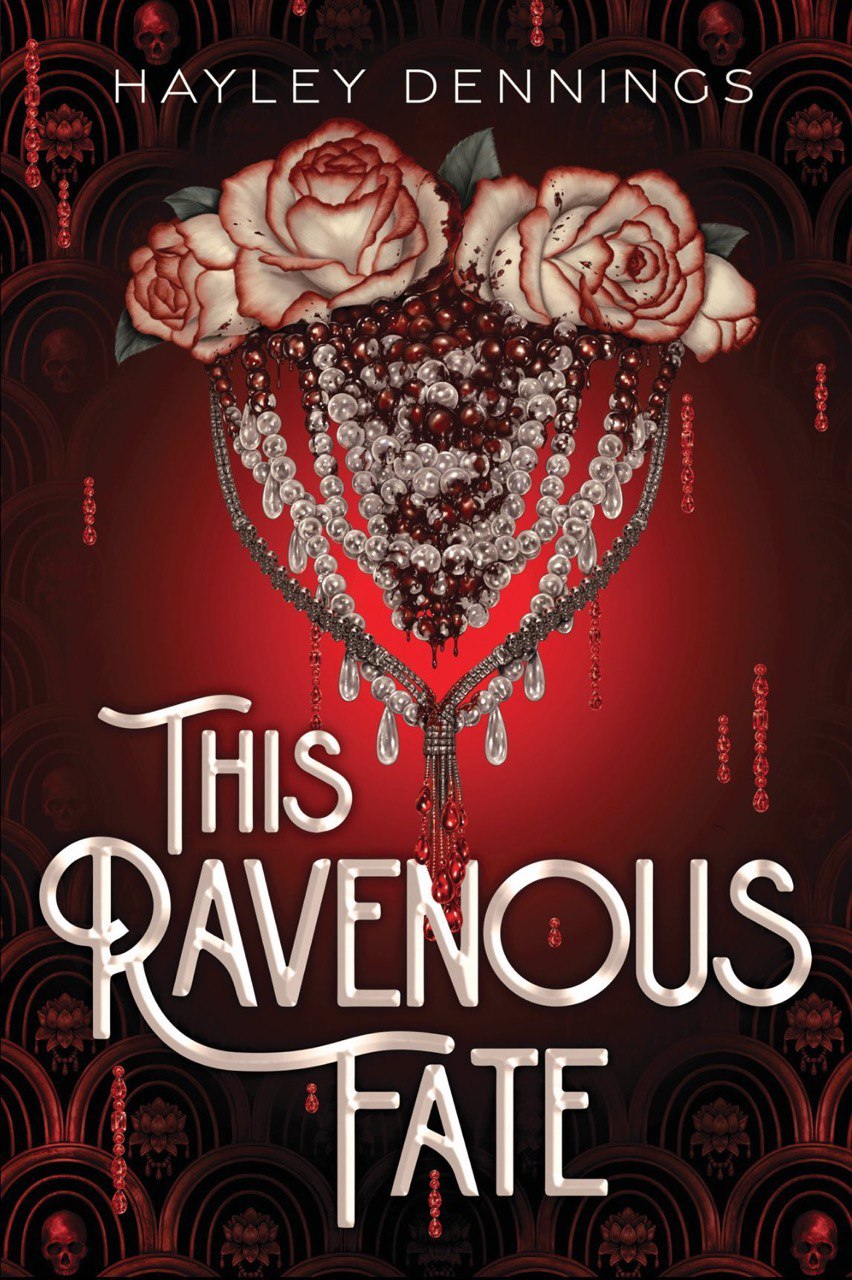 As we often do, let’s start with the cover and the design of the book. What stood out to you all?
Crystal: I haven’t seen a final copy, but the ARC has a gorgeous cover and I loved the pattern on the endpapers and chapter divisions. A hint of that is at the top and bottom edges of the cover. It incorporates the lotus that is found in the Saint family seal. There are a lot of details to notice, but to me the overall effect drips with passion, blood, and danger.
Audrey: What I loved most about the cover design is that when you look at it closely, it screams historical vampire book. There’s the hint of art deco-style wallpaper, the opulent jewelry, the roses, and of course blood splashed everywhere. It was either going to be vampires or a murder mystery, and it turned out to be both! That’s fantastic design by Nicole Homer and art by Colin Verdi.
K. Imani: Yes Audrey! You truly know what you can expect from the novel based on this gorgeous cover. My favorite part of the cover is the roses that are white tipped with red which, to me, symbolizes the tarnishing of innocence. Layla’s specifically as her innocence was taken from her when she was turned into a reaper and Elise’s throughout the novel. The dripping jewelry is just beautiful.
Setting plays a huge role in this story. What particular places stood out to you? Or what aspects of those places made an impact?
Crystal: The Cotton Club was a place that really caught my attention, particularly as Layla compared it to a circus. The way that white people looked at and treated Black girls on the street was significantly different than how it happened in that space. It also pulsed with light, music, life, and debauchery so of course it was intriguing.
K. Imani: Being that the novel was set in Harlem is what drew me to the novel initially. 1920’s Harlem is one of my favorite historical eras because it was such an amazing time of Black art and culture and so any novel that is set in this time period makes me happy. I love the mention of all of the different neighborhoods described as they were way back then as it was described as the Harlem that I’ve seen in pictures.
Audrey: Like K. Imani, I really enjoyed that it was set in the 1920s. This Ravenous Fate did a great job of depicting the highs of the Roaring Twenties (advances in tech/science, the glitz and glam of clubs/speakeasies, a booming economy, etc.) while also making sure we got to see the lows, too (unethical medical experimentation, lynchings/race massacres, organized crime, corrupt politics, etc.). Seeing 1920s Harlem from a Black (fictional fantasy/horror) lens was fantastic, especially since a lot of common perception of the 1920s is very white. I also appreciated Elise’s occasional asides comparing her treatment in Paris vs Harlem as a Black teenager despite her family’s wealth.
The vampires, or reapers, have a lot of similarities to those from other tales. Was there anything you noticed that made this unique among other vampire lore?
Crystal: What fascinated me was the give and take. The reapers take the blood, but they can also share things through the process. There is pain, but also attraction and pleasure. There seemed to be a heightened amount of sensuality in that experience of taking and giving.
K. Imani: You know I love vampires so I loved Dennings’s take. I liked that they didn’t have to drink to kill, that a bite doesn’t necessarily change a person, and that they can use their bites to heal. I also loved that the reapers can eat! It showed that the reapers were still human, but really needed a different food source to sustain their bodies. This was such a fun and unique take on vampire lore and Dennings absolutely killed it.
Audrey: I haven’t consumed a ton of vampire content, but I really liked how the prologue told us flat out that the reapers were made by people in what would become the U.S.: “She was remade with spite. The first of her kind, her humanity stripped away and pumped full of poison and depravity in a laboratory. … She was as new as America, a reincarnation of its greatest evils, comfortable in corporeal sin.” That set the tone so well for more unethical medical experiments and corrupt people doing terrible things to cling to power and try to impose control over others.
The characters experience a lot of death and violence, but this is also a love story. What did you enjoy about Layla and Elise’s complicated relationship?
Crystal: I definitely appreciated the many layers of their relationship. The friendship and time that they’d had together over the years made everything hold so much more weight. The anger was stronger, but so were all of the emotions. One line that really got me from their early days was, “You’re my best friend. I don’t want to do life without you.” The stakes were pretty high between them.
K. Imani: I had mixed emotions about their relationship because there was so much hurt between them, but there was also so much love. Like Crystal, I appreciated how they had to learn how to trust each other and be open with each other in order to solve the mystery. Their story is a lesson in forgiveness and moving forward. To have that in a YA novel, a vampire one at that, was lovely.
Audrey: I loved that they had been such good friends and then had real, painful reasons to become enemies and be separated from each other. I loved that to varying degrees they both still missed their earlier relationship and hated that they missed it. Watching Elise and Layla learn how they each had (and hadn’t) changed as they tried to solve the murder mystery was a treat because we got to see the longing they had for their shared past—and eventually what they had for each other in the present as they got to know each other in the present. I like that it took quite a bit of time for them to admit their feelings for each other.
Another very interesting relationship of an entirely different kind is that between Elise and her father. Thoughts?
Crystal: I hope that not many readers can connect to such a relationship, but I’m afraid there are a lot of folks wandering around who have put a lot of effort into reshaping themselves to please or impress a parent. The mental and emotional gymnastics of trying to please him and keep believing the best of him were pretty intense and frustrating to watch.
K. Imani: The only word I can come up with is oof. Their relationship was so toxic and I felt so sorry for her. Like you said Crystal, I hope not many people can relate to the relationship but we do know of folks who try so hard to fit into their parent’s expectations that they start to lose themselves. I actually feel like Layla and Elise’s relationship was somewhat of a nice counterbalance because they had to work to build trust in each other and that brought about Elise’s confidence, allowing her to see how horrible her relationship with her father was. He was just such a horrible man that everytime he was in a scene I just wanted him gone.
Audrey: Oh, Elise’s dad made me so upset. I didn’t realize at first that something was wrong in Elise’s point of view, but about the point where he named her his heir, I started realizing that things were actually much worse than a stern 1920s dad being disappointed in his kid. The slow building of cracks in their relationship hurt, especially once it became clearer to me that her dad was keeping her in the dark about important information. I was so relieved when Elise finally admitted that her father wasn’t the man she had thought he was.
What’s next on your reading journey?
Crystal: Another thriller that I have on my list is Looking for Smoke by K.A. Cobell. I’m also looking forward to reading Abdi Nazemian’s newest release Desert Echoes. On a lighter note, I’m also eager to get my hands on Guava and Grudges by Alexis Castellanos. I tend to gravitate toward books featuring food and especially when that food involves baked goods.
K. Imani: I just finished reading Love Requires Chocolate by Ravynn K. Stringfield (look for my review) and have yet to decide on my Halloween reads yet, but I’m sure I will soon.
Audrey: The Witch of Wol Sin Lake by Lena Jeong is next up on my YA reading list. I’m also hoping to pick up a horror title or two for October—I’ve got my eye on The Hysterical Girls of St. Bernadette’s by Hanna Alkaf.
If you want more information about the book and the writing of it, you can listen in on a discussion with the author here: